
 +7(800)250-87-00
  +7(495)150-11-22
  +7(499)110-40-67


Endoscopy Department
At the Endoscopy Department of the A. Tsyb MRRC – branch of the National Medical Research Radiological Centre of the Ministry of Health of Russian Federation, modern diagnostic methods and minimally invasive endoluminal treatment of early forms of malignant tumors are carried out using expert-class equipment.

- Many years of experience
- Expert diagnostics
- The latest treatment methods
- Mandatory health insurance, VMP
The A. Tsyb MRRC applies an advanced high-precision diagnostic method – capsule endoscopy

How capsule endoscopy is performed
Capsule endoscopy has been used in diagnostic practice for over 15 years. The CapsoVision video capsule system, used at the A. Tsyb Medical Radiological Research Center, represents a new generation of endoscopic diagnostic methods for gastrointestinal (GI) tract diseases. The main component of capsule endoscopy is the endoscopic video capsule, measuring from 10 to 30 mm (capsule endoscope, consisting of a shell, camera, light sources, power source, and transmitter). Once in the GI tract, the capsule provides a 360-degree view and allows any changes along its path through the GI tract to be captured. After the examination is completed and the capsule is handed over to the doctor at the Endoscopy Department of the A. Tsyb MRRC, the process of interpreting the obtained data begins.

Indications for capsule endoscopy
Using specialised software, the doctor reviews images obtained by the endoscopic capsule and makes a conclusion. At the patient’s request, all obtained data can be provided to them on an electronic medium. Capsule endoscopy is performed to diagnose conditions such as:
- gastrointestinal bleeding;
- anemia;
- diarrhea of unclear aetiology;
- chronic abdominal pain;
- malignant neoplasms;
- Crohn’s disease;
- coeliac disease;
- irritable bowel syndrome;
- enteritis of various aetiologies;
- polypus intestinal diseases;
- peptic ulcer disease.

Contraindications and advantages of performing capsule endoscopy
- intestinal obstruction;
- intestinal diverticulosis;
- stenoses;
- strictures of the gastrointestinal tract of various aetiologies;
- acute myocardial infarction in the acute phase;
- relative contraindications are pregnancy and childhood, and acute cerebrovascular accident in the acute period.
- capsule endoscopy does not require the use of an endoscope;
- the capsule is sterile and used only once, so the risk of infection transmission (HIV, hepatitis, etc.) is reduced to zero;
- the method allows examination of the entire gastrointestinal tract;
- the procedure does not require anesthesia;
- there is no risk of injury;
- the procedure is completely painless and does not cause any discomfort;
- high informational value of the examination.
- during the procedure it is impossible to take a biopsy;
- high cost of the procedure and single-use of the capsule;
- it is not a universal diagnostic method.

Preparation for the examination
Preparation for this procedure does not differ from the standard preparation for a colonoscopy. The patient should follow a diet excluding plant fibre for 3 days before the examination. On the day before the examination, a special medication should be started.
Advantages of video capsule endoscopy at the A. Tsyb MRRC
- Highly qualified specialists
- Modern equipment
- Possibility of further examination and treatment
- Use of the latest model video capsules from a reputable manufacturer and obtaining images in HD format
- Recording the examination on an electronic medium at the patient’s request
- Quick receipt of reliable results
The main areas of activity of the Endoscopy Department at the A. Tsyb Medical Radiological Research Centre (MRRC) – the branch of the FSBI “National Medical Research Radiological Centre” (NMRRC) of the Ministry of Health of the Russian Federation

Diagnostic Endoscopy
The Endoscopy Department of the A. Tsyb Medical Radiological Research Centre (MRRC) is equipped with the most modern expert-class equipment in the world. Every year, the endoscopy department performs over 4,000 diagnostic procedures. The main focus of the endoscopy department is the diagnosis of cancer and other tumors of the gastrointestinal and respiratory organs at an early stage, as well as the detection and treatment of precancerous conditions. The department staff have extensive experience in endoscopic diagnosis of malignant tumors of the trachea, bronchi, lungs, and mediastinal organs, early cancer and precancerous pathology of the esophagus, stomach, small and large intestines, and diseases of the liver, gallbladder, bile ducts, and pancreas.

Operative endoscopy
When stomach cancer, esophageal cancer and other localizations are detected at stage I – its early form, minimally invasive organ-preserving and intraluminal endoscopic treatment is actively used, which allows patients to be treated without open surgery and chemotherapy. This treatment ensures a high quality of life for patients, low recurrence and mortality rates (less than 1%). Over the past 5 years, thanks to the use of proprietary techniques, early-stage stomach cancer has been detected in a large number of patients, most of whom have undergone organ-preserving intraluminal endoscopic treatment: endoscopic mucosal resection with submucosal dissection, allowing endoscopic removal of even large tumors.
Combined endoscopic treatment methods have also been introduced into clinical practice. This approach includes both endoscopic resection techniques and photodynamic therapy with various domestically produced photosensitizers. The use of combined endoscopic treatment with photodynamic therapy provides the possibility of curing patients with early and localized forms of gastric cancer, who were denied other treatment methods due to the presence of concomitant cardiovascular pathology.

Endosonography (EUS)
Endosonography (EUS) is a diagnostic technique that combines the capabilities of endoscopic and ultrasound diagnostics. The procedure uses a flexible endoscope equipped with an ultrasound probe and a video camera. The endoscope can be inserted into the oesophagus, stomach, duodenum, rectum or colon. Using the endoscope, the ultrasound probe is positioned as close as possible to the area being examined. During the examination, a fine needle biopsy of a lesion (FNA) can be performed. The use of very high ultrasound frequencies (5.0; 7.5; 12 and 20 MHz) in the device ensures high-quality imaging with a resolution of less than 1 mm, which is not achievable with other methods such as conventional ultrasound, computed tomography, magnetic resonance imaging or endoscopic cholangiopancreatography.

Diagnostic endosonography
EBUS — Endobronchial ultrasound examination. This type of examination allows for transbronchial needle biopsy (EBUS-TBNA) of structures outside the airways, lymph nodes in the chest or tumors adjacent to the airways. EBUS bronchoscopy is used for pathological changes in the mediastinum detected on X-rays or CT scans during an investigation due to episodes of difficulty breathing, cough or chest pain.
Such research is particularly important for investigating lymph nodes when planning lung cancer treatment. Complications from this procedure occur in less than 1% of cases, with a mortality rate of 0%. Thus, EBUS bronchoscopy is a safe and patient-friendly method of examination. The EBUS-TBNA procedure has proven highly valuable not only for determining the staging of tumour involvement in lymph nodes (N-staging) but also as a means of obtaining biopsies for cytological and histological molecular analyses. The obtained samples can be used for making a reliable diagnosis, preparing cell blocks, and conducting immunohistochemical and molecular studies.

Indications for the use of endoscopy
- Diagnosis of neoplasms of the esophagus, stomach, duodenum, pancreas, biliary tract, lungs, mediastinum;
- performing a needle biopsy of suspicious lesions in the esophagus, stomach, duodenum, adjacent organs, lymph nodes; detection of pathological formations in the gallbladder and bile ducts, pancreatic duct without using ERCP;
- assessment of the severity of changes in the parenchyma and ducts of the pancreas in various types of pancreatitis and its complications;
- submucosal tumors of the upper gastrointestinal tract or suspicion of their presence based on endoscopic examination results;
- determination of the stage of a malignant process and depth of involvement in small neoplasms;
- differential diagnosis of various diseases;
- diagnosis of lung and bronchial cancer;
- assessment of the condition of intrathoracic lymph nodes.
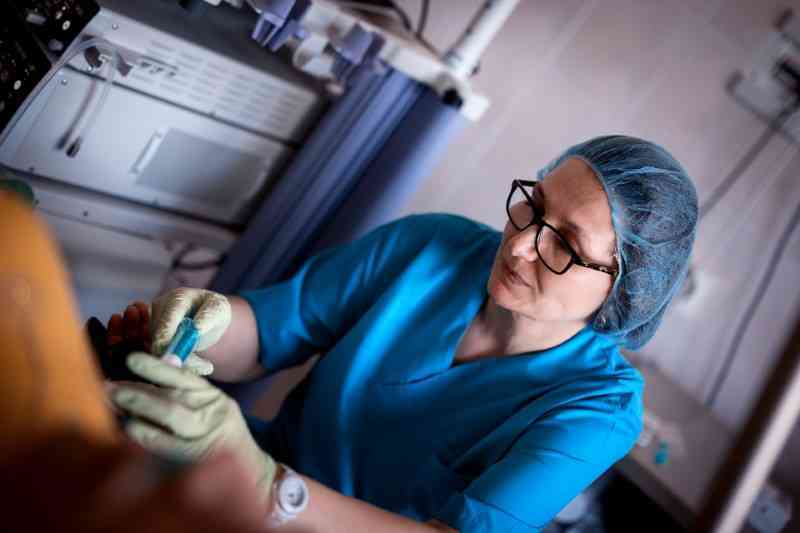
Endoscopy Contraindications
Endosonography contraindications may be absolute or relative.
Absolute: extremely severe general condition of the patient, which makes it impossible to perform endoscopic examination of the upper gastrointestinal tract without the risk of respiratory and cardiac depression. For example, the presence of unstable angina, acute myocardial infarction, stroke, or acute psychiatric conditions in the patient.
Relative: significant changes in the blood coagulation system (if surgical manipulations are planned).

Preparation and performance of endosonography
Before the procedure, the doctor takes the patient’s medical history: whether the patient has any drug allergies, suffers from chronic cardiovascular or respiratory diseases, diabetes, and whether they are taking any medications. A few hours before the procedure, you must not eat or drink. Cleansing enemas, laxatives, defoaming agents and painkillers may be prescribed. Preparation depends on the organ being examined: if it is the upper digestive tract, preparation is similar to that for a gastroscopy. If it is the lower gastrointestinal tract, preparation is similar to that for a rectoscopy or colonoscopy.
Endosonography of the upper gastrointestinal tract resembles an upper endoscopy, while that of the lower tract resembles a sigmoidoscopy or colonoscopy. The procedure lasts from 30 to 90 minutes. Overall, it takes more time than a gastroscopy, especially if complemented by fine-needle biopsy. Discomfort during the procedure is associated with the larger diameter of the endoscope, its stiffness compared to a gastroscope, and the duration of the procedure. Endosonography is recommended under general anesthesia (medicated sleep) as patient restlessness can significantly complicate the work of the doctor and affect the quality of the study. Surgical interventions under endoscopic ultrasound control are performed strictly under general anaesthesia. Hospitalisation may be required for certain therapeutic interventions.
After the procedure, it is important to remember that air being pumped into the digestive system may cause discomfort, which will pass sometime after the procedure. In the case of a fine-needle biopsy, it is necessary to refrain from eating and remain under the doctor’s supervision for a certain period. The patient will typically need around 30 minutes to recover. Afterwards, the patient can drink warm fluids or have a light meal. The doctor will provide the results of the examination and give all necessary recommendations.

About the Endoscopy Department of the A. Tsyb MRRC
Every year, more than 4,000 patients undergo diagnosis and treatment in the department, where highly qualified specialists provide surgical care. The staff regularly improve their professional skills, participate in symposia and conferences both in Russia and abroad.