

 +7(495)150-11-22
  +7(800)250-87-00
  +7(499)110-40-67









A DELICATE ISSUE THAT IS OFTEN KEPT SILENT: WHAT LIES BEHIND RECURRENT CYSTITIS
Up to 70% of patients with chronic cystitis actually have lower urinary tract dysfunction, which triggers recurring infections. A 62-year-old patient lived for years with chronic cystitis – against the backdrop of impaired urine outflow and constant incomplete bladder emptying. A story rarely spoken aloud: a strong, unpleasant odour that cannot be concealed, stained underwear, embarrassment in front of others. Courses of antibiotics followed one another, but relief was temporary. Over time, this ceases to be a «delicate problem»- and becomes a serious reduction in quality of life.
Our patient experienced urine retention of up to 300 ml. Inflammation occurred constantly, the urine became cloudy and developed a sharply unpleasant odour, and there were even small ‘leaks’ due to retention. These symptoms almost deprived the patient of the ability to lead a normal life, explains Victoria Romikh, Head of the Urodynamics and Neurourology Department at the N. Lopatkin Scientific Research Institute of Urology and Interventional Radiology. With such symptoms, it is difficult to go to work, travel, visit friends, or go to the theatre… Repeated courses of antibacterial therapy and medications to improve urination were completely ineffective. According to modern clinical approaches, in such situations, one can proceed to minimally invasive treatment, continues Victoria Valeryevna.
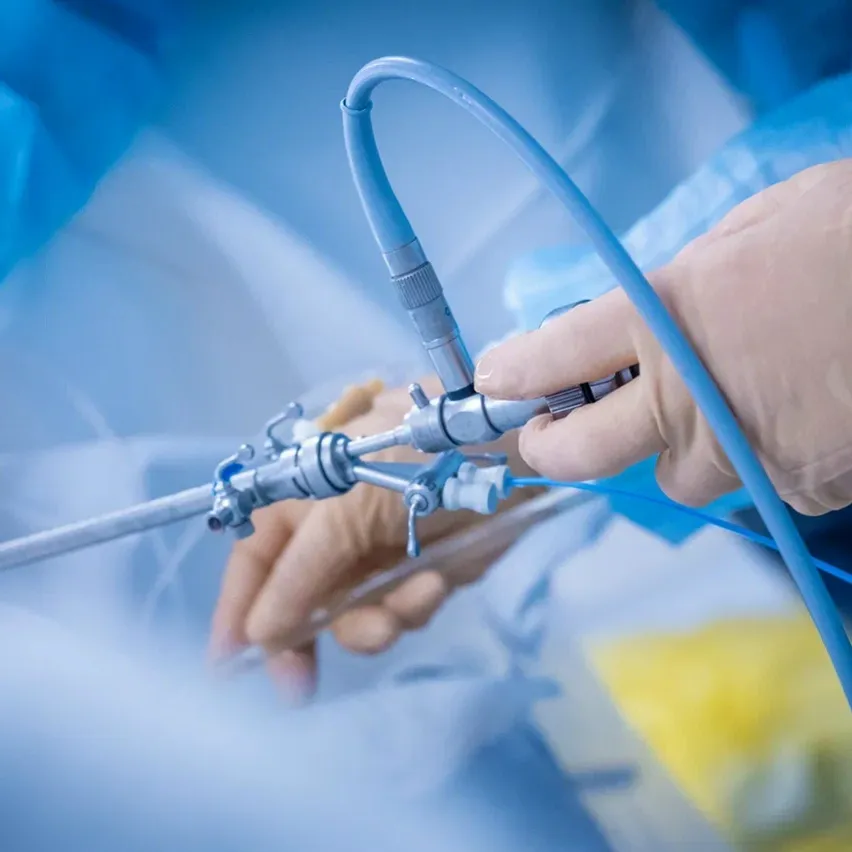
The botulinum therapy offered to the patient allows the relaxation of the bladder neck and pelvic floor muscles to facilitate free and complete urination. It is performed under anesthesia in an operating theatre using endoscopic equipment. «During cystoscopy, we always conduct a thorough examination of the bladder and its sphincter area», – emphasizes Dr. Romikh. The essence of the procedure is as follows: a special needle is introduced through the cystoscope’s working channel, and several injections of the botulinum toxin solution are administered into the sphincter area, which acts like a tap controlling the release of urine from the bladder. The entire process is conducted under video surveillance.
As a result, the sphincter will relax, and normal urine flow will be restored. After this, the patient will undergo a special course of pelvic floor muscle exercises. The effect of botulinum therapy is visible within 2 weeks, and the final result is formed a month after the administration of the drug. You can make an appointment for a consultation at the Research Institute of Urology and Interventional Radiology by phone: +7 (499) 110-40-67