

 +7(495)150-11-22
  +7(800)250-87-00
  +7(499)110-40-67





WHEN WAITING IS NOT AN OPTION: DOCTORS SAVED THE VISION OF A MOTHER-TO-BE
It all started with a barely noticeable asymmetry of the face. So slight that there seemed to be no reason for serious concern. Thirty-five-year-old Tatiana noticed that one of her upper eyelids had dropped slightly. She consulted a doctor; the changes were assessed as mild ptosis, and a watchful waiting approach was chosen.
Time passed, and Tatiana became pregnant. What had previously seemed like a minor peculiarity began to change rapidly. A neoplasm was growing in the upper eyelid area, and by the 25th week of pregnancy it had reached a size that was displacing the eyeball.
According to the patient, the eye virtually stopped closing, the cornea was constantly drying out, and there was a real threat of corneal damage and vision loss. Experiencing pain and severe double vision, she turned to several medical institutions, none of which agreed to treat a pregnant woman.
“We always review such cases at a multidisciplinary council involving oncologists, obstetrician-gynecologists, neonatologists, and other specialists. Every decision is assessed simultaneously from the standpoint of safety for both mother and child,” says Yulia Payanidi, Professor, obstetrician-gynecologist and oncologist at the P. Hertsen Moscow Oncology Research Institute.
Postponing the intervention until after delivery would have meant risking the patient’s vision, but surgery at this stage of pregnancy involved an entirely different level of risk.
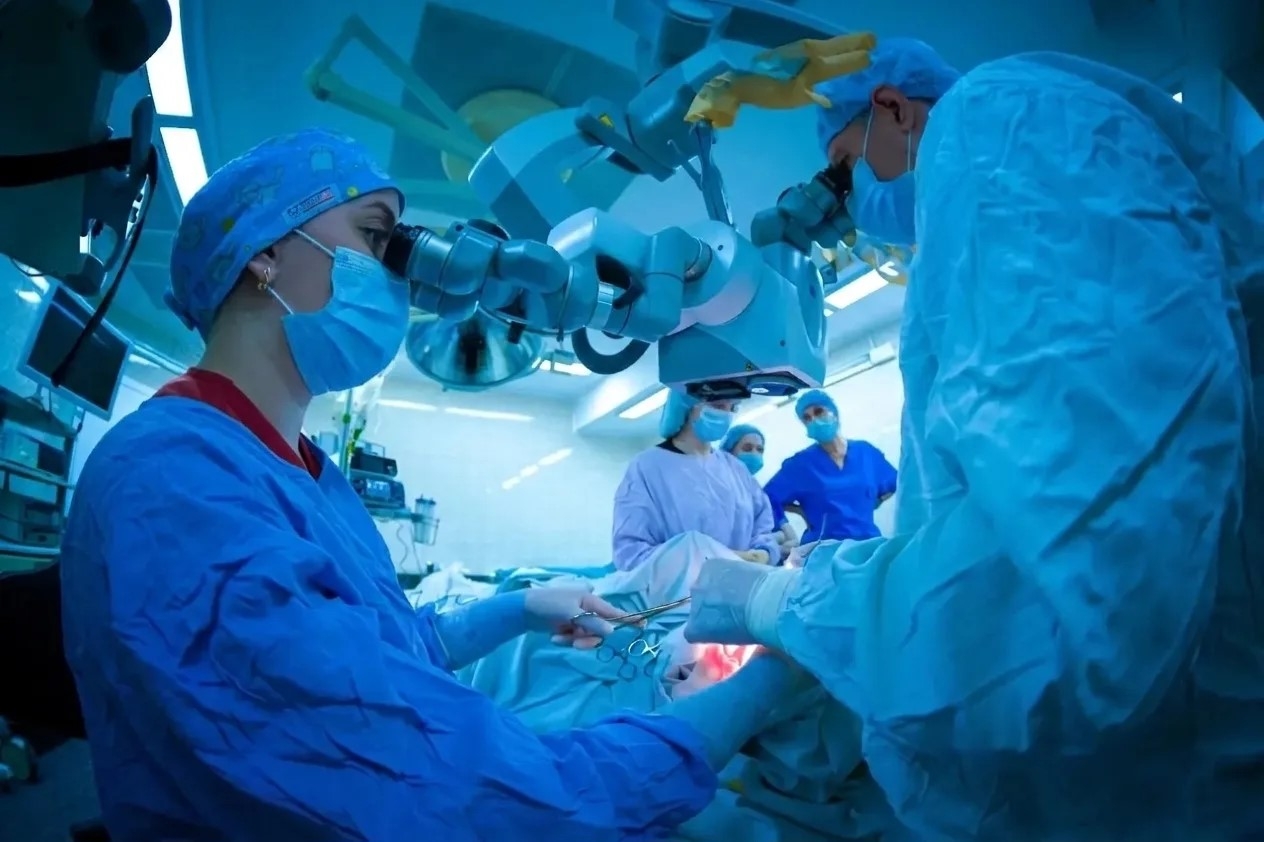
«We needed not only to remove the tumor while preserving the eye and its function, but also to restore the ability to fully close the eyelids. And all of this had to be done as quickly as possible, because every extra minute of anesthesia during pregnancy matters. Throughout the entire operation, the condition of both mother and child was closely monitored, and the team was prepared for any scenario, up to and including the need for emergency delivery», – explains Dmitry Davydov, MD, Professor, and Head of the Department of Oncoplastic Surgery at the P. Hertsen Moscow Oncology Research Institute.
The surgeons were able to perform the operation in full. Tatiana will remain under dynamic observation, and after the birth of her child, doctors plan the next, non-emergency stage — aesthetic correction.